
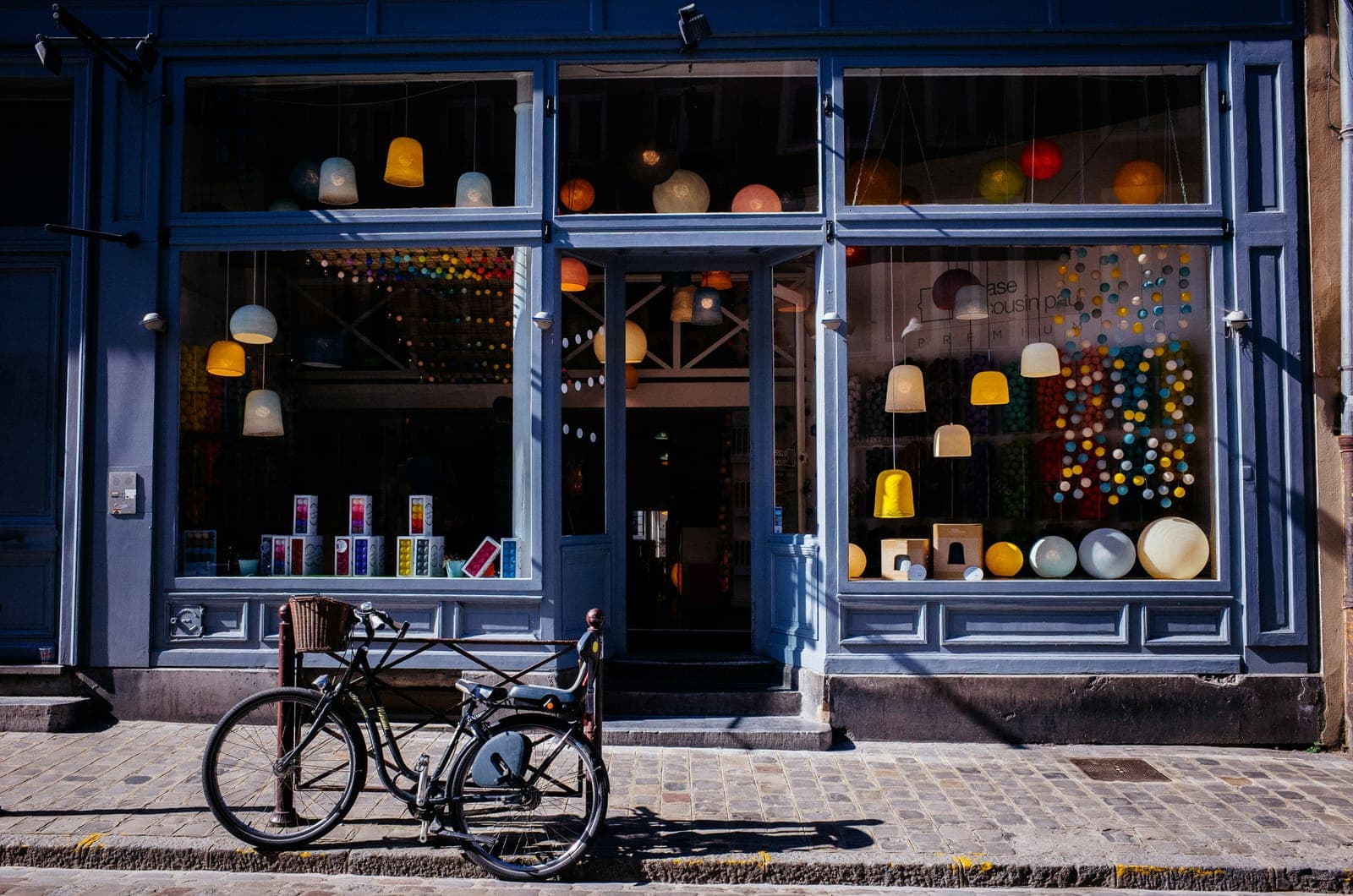
Most of us buy a lot more online than we used to, and it's easy to see why: it's quick, prices are easy to compare and the parcel turns up at the door. What tends to get lost along the way is the habit of checking whether the thing we need is already sitting on a shelf a few streets away. Quite often it is, and we only really notice the shop that sold it once the shutters have come down for good.
The most practical reason to keep buying from those shops has to do with where the money ends up. When you pay an independent shop, a fair share of it stays nearby, because the owner usually lives in the area and spends there, the staff do the same, and the shop tends to lean on other local businesses for its accounting, repairs or printing. A chain has the same kinds of costs, but more of them are paid through a head office that may well be in another country. Back in 2004 the consultancy Civic Economics tried to measure that difference in Andersonville, a neighbourhood in Chicago, and found that of every $100 spent in independent shops about $68 stayed in the city's economy, against $43 at chains selling similar things. It's one study, and not a recent one, so the exact figures shouldn't be stretched too far, but the reasoning behind them applies just as well in Lugano or Lausanne as it does in Chicago.
The second reason is harder to put a number on. A street lined with open shops is a street where people slow down, stop for a chat and recognise one another, and where someone is usually keeping half an eye on what's going on. Jane Jacobs, writing about cities in 1961, called this having "eyes upon the street", and she counted shopkeepers among the most dependable of them, since they're there all day and know who comes and goes. Anyone who has watched a high street empty out one closed shop at a time will know what she meant. Nothing dramatic happens, but the street slowly turns into somewhere you pass through on the way to somewhere else.
There's also the shopping itself, which in a good small shop is simply more interesting. Someone has chosen what's on the shelves, so they can usually tell you why one coffee is better than another, which olive oil is worth paying a little more for, or whether the cheaper screwdriver will survive its first year. You also tend to leave with things you didn't know you wanted, which is probably why the little shops people stumble on while travelling stay in their memory long after the big stores have blurred together.
Price is the obvious objection, and it's a fair one. A small shop can't always compete with a retailer buying in enormous volumes, and for some things ordering online just makes more sense. For a lot of everyday purchases, though, the gap is smaller than people assume, and it shrinks further once you count delivery charges, the hassle of returns and the afternoon spent waiting in for a courier. When you do end up paying a bit more, you generally get something for it, even if it's only a person you can go back to when the thing breaks.
None of this means giving up online shopping altogether. A more realistic start is to pick one or two things you buy regularly, like bread, coffee or fruit and vegetables, and get them from the same local shop for a while, or simply to check what's nearby before ordering something online. That second part is what we built WhereTo for. You can search for a product and see which shops around you stock it, and if you come across something worth knowing about in a local shop, you can add it so that other people can find it as well.
Small shops rarely close because their customers decide to stop coming. It tends to happen gradually, as enough regulars drift elsewhere without really meaning to, and the ones that stay open are mostly those whose neighbours kept walking in.
Sources
- Civic Economics, The Andersonville Study of Retail Economics, Chicago (2004).
- Jane Jacobs, The Death and Life of Great American Cities, Random House, New York (1961).